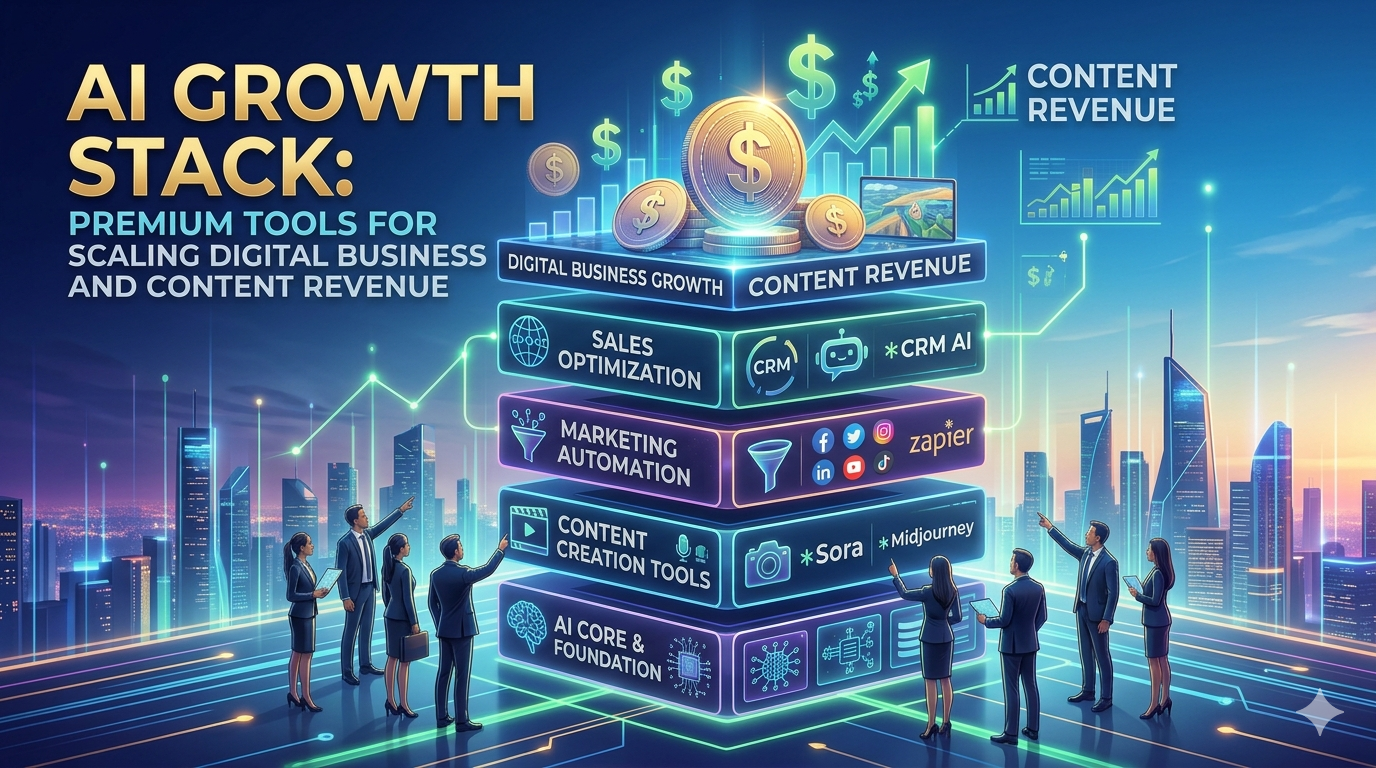
 The AI Revenue Architecture 2026: Building Scalable Digital Income Systems with Autonomous Intelligence
In 2026, digital growth is no longer defined by how much content you produce, but by how intelligently your systems generate revenue.
The evolution of AI has moved beyond simple assistants. We are now operating in an era of autonomous intelligence systems—where creators and entrepreneurs build structured “income architectures” powered by interconnected AI tools.
Instead of working harder, modern digital businesses are designed to scale through systems, automation, and optimized workflows.
This guide breaks down how to assemble a high-value AI stack that supports scalable content production, business automation, and monetization efficiency.
1. Intelligence Layer: Research, Strategy & High-Value Content Creation
Every high-earning digital system begins with intelligence—data, insight, and strategic direction.
Modern AI tools now function as a real-time research and decision support layer.
Key Tools in This Layer:
- Gemini 3 – Used for strategic insights, trend forecasting, and market direction analysis.
- ChatGPT-5 – Supports structured content creation, ideation, and business planning workflows.
- Perplexity AI Pro – Provides real-time sourced information, ideal for finance, SaaS, and technology content.
- Claude (Advanced Models) – Helps generate natural, persuasive, human-like content for blogs, landing pages, and scripts.
Purpose of This Layer:
Instead of guessing what performs well, creators now rely on AI-driven insights to identify high-value topics with strong commercial intent.
2. Creative Production Layer: Visual Identity & Automated Content Output
In modern digital business, visual quality directly impacts trust, engagement, and conversion rates.
AI now enables production-level content without traditional design or video teams.
Key Tools in This Layer:
- Sora – Text-to-video generation for cinematic marketing content.
- Runway Gen-3 – Advanced AI video production for ads, reels, and faceless content.
- Midjourney v7 – High-quality AI visuals for branding, thumbnails, and marketing assets.
- Canva Magic Studio – Fast content creation for presentations, social media, and digital branding.
Purpose of This Layer:
To build consistent, professional-level branding assets that improve click-through rates, engagement, and audience trust.
3. Automation Layer: Business Systems & AI Workflows
True scaling happens when human effort is reduced and workflows are automated.
This layer transforms AI tools into operational systems that run continuously.
Key Tools in This Layer:
- Zapier Central – Connects multiple applications into automated workflows across business operations.
- Intercom Fin – AI customer support system that reduces workload while improving user experience.
- Notion AI – Central workspace for managing content strategy, planning, and knowledge organization.
Purpose of This Layer:
To build a system where tasks such as lead handling, content scheduling, and customer support are partially or fully automated.
4. Monetization Strategy Layer: High-Value Traffic & Revenue Targeting
The most profitable AI systems are built around high-commercial intent niches.
Instead of broad topics, focus is placed on keywords and industries that attract premium advertisers.
High-Value Keyword Directions:
- AI workflow automation for business operations
- Enterprise AI tools for SaaS growth
- AI-powered CRM systems for scaling startups
- Autonomous lead generation systems
- Financial forecasting using AI systems
These topics typically attract advertisers from:
- SaaS platforms
- fintech companies
- enterprise software providers
- automation tools and AI startups
5. System Building Roadmap: From Tools to Revenue Architecture
Building a digital income system is a structured process—not a random collection of tools.
Phase 1: Foundation (Weeks 1–2)
Focus on:
- content intelligence
- AI-assisted research
- visual content creation
Phase 2: System Integration (Weeks 3–4)
Focus on:
- workflow automation
- AI agents
- content pipeline structuring
Final Outcome:
A self-operating digital ecosystem capable of generating consistent content, traffic, and revenue with reduced manual intervention.
Conclusion
The future of digital income belongs to those who build systems—not those who simply create content.
The AI Revenue Architecture 2026 represents a shift toward structured, automated, and scalable digital businesses powered by intelligent tools.
Success is no longer about working more—it is about designing systems that work continuously.
SEO Meta Data (Optimized Version)
Focus Keyword: AI Revenue Architecture 2026
Secondary Keywords: AI business automation, scalable digital income systems, AI content creation tools, autonomous AI workflows, high CPM AI niches
Slug: /ai-revenue-architecture-2026-digital-income-systems
Meta Description:
Discover the AI Revenue Architecture 2026—a structured system for building scalable digital income using autonomous AI tools, automation workflows, and high-value monetization strategies.